
Archive for 七月 4th, 2009

4
七月

Glamorous Youth

   Posted by: admin    in 來稿, 影評試影室, 香港影評人協會

Dreams are the Forfeits Hongkongers Pay for Economic Development

Kenji Chan

Glamorous Youth is a gloomy and artistic movie about the growth of a Hong Kong boy who becomes a man in one year, Hong Kong people’s loneliness and loss of dreams, the glamour of youth, the problematic relationship between typical Hong Kong men (港男) and typical Hong Kong ladies (港女) and the changing relation between China and Hong Kong.

The film is set in 2006 and ends in 2007. After 10 years since the handover to China, Hong Kong is on the surface a prosperous international city, yet Hong Kong people value too much the importance of money and spend too much time working, so our family members are often neglected. As a result, most of us lack dreams and feel lonely. We don’t know what we live for.

Apart from the messages engaging Hong Kong people, I love the cinematography and symbolic images e.g. the lighthouse with the light off and the train linking China and Hong Kong. Local places like Chan Nam Chong Memorial College, Cho Yiu Estate, Kwai Tsing Threatre, Cheung Hang Estate, Kwai Chung Container Terminal, etc, can be seen. There are also lots of beautiful scenes showing the Hong Kong skyline and buildings which are sometimes deliberately made out of focus. They symbolize the characters’ emotions, e.g. a clear sky seen while running, and convey a message that Hong Kong is prosperous on the surface, but in fact we get lost in this concrete jungle and cannot see our future clearly. Besides, the dark-yellow / dark-red rooms with a sharp contrast between light and shadow, the black-and-white factory and the dimly-lit wedding ceremony can highlight Hong Kong people’s loneliness. Moreover, the mirror in the flat is cleverly used to show the inseparable, but alienated relationship between the father and his son.

The songs used fit the theme and mood of the movie very well, for instance, The Pearl of the Orient (東方之珠). The Cantonese opera (粵曲) also points out the importance of appreciating art.

The cast generally acts naturally and the actor who delivers the most finely nuanced and convincing performance is Tai Bo (太保) who stars as the main character’s father undergoing middle-age crisis.

Nevertheless, the film can be more well-organized and focused. Moreover, the teacher is a little bit preachy and implying his sexual orientation seems unnecessary; so are the explicit sex scenes.

On the whole, it is a sincerely made melodrama most Hong Kong movie lovers can identify with. After the screening, the audience may ponder on the gloomy future of Hong Kong where people are only obsessed with money and forget about our dreams, without which we are only walking skeletons without souls.
4
七月

《音樂人生》

   Posted by: admin    in 影評試影室, 香港影評人協會

特立獨行的人格

曉龍

不少人認為香港的填鴨式教育制度「製造」了一個又一個一模一樣的「機械人」,每個人有同樣的目標,同一的喜好,同類型的理想,目標、喜好及理想皆源於「求學一定求分數」的基本設定。雖然香港教育局的高官多次強調及宣傳「求學不是求分數」的口號,但媒體(包括報章及電視節目等)只計算成果而不描述過程的態度,卻使香港的學生活像一個又一個的倒模,只以獲獎為最終的目標,最佳的喜好,最崇高的理想。當《音樂人生》中的中學生以自己所屬的學校在音樂比賽中獲獎無數為值得驕傲的最高榮譽時,片中的男主角黃家正卻以不屑的態度視之,認為他們為拿獎而努力,不懂得以音樂為本,只盲目追求個人/團體的「殊榮」,反而完完全全忘記音樂的本質,撇棄音樂存在的真正意義。他特立獨行的思想和人格,對現行的教育制度造成莫大的衝擊,值得我們深切反思。

還記得福特主義在資本主義的城市內已廣泛地應用在社會的每一個層面上,教育制度亦不例外。黃家正秉承「求學不是求分數」的宗旨,讓自己的同組同學演奏超時的樂章,明知會被扣分,但偏偏依循自己的喜好,享受自己「崇拜」的音樂,沉醉在自己的風格內。這種特立獨行的個性,可能造成人際關係的障礙,亦可能被整個社會排斥;其我行我素的風格,使他長大後與父親產生難以磨滅的鴻溝,即使他知道和了解父親投放大量資源和心力栽培他,仍然埋怨父親強迫他參加大量比賽時只以獲獎為唯一可取的目標,把喜好、個性等人類原原本本的價值降至最低,所謂利慾薰心,其具體的人格特質正在父親的心態上完全體現出來。父親可能只視自小已獲獎無數的他為獲取讚賞和榮譽的「工具」,從沒有顧及他的個性和喜好,導致他對父親產生一種難以言喻的仇恨。片中他多次高呼自己渴望成為一個「普通人」,此要求心理補償的源頭,正在於其過度追求俗世價值,樂於享受群眾歡呼喝采聲而忘卻兒子個人感受的父親。

在多元化的社會內,像黃家正的特殊天才可能不算罕見,但在強調福特主義的單一化社會內,像他這類特立獨行的人卻成為難得一見的奇人。他在十一歲時已開始談論人生的意義,六年後仍想不透基督教的真諦,天真地以為自己的老師和同學在參加比賽前祈禱是加強團結性的一種「手段」,對人生的依靠遍尋不獲之際,仍以為上帝只是一種最高主宰的象徵,其相信自己卻難以改變世界的不安和無奈,莫非就是天才自以為是而不願意改變自己的悲劇命運?他鬱鬱寡歡的心理狀態,莫非就是天才未能盡情發揮自己的才能而毫不自在的最直接後果?

4
七月

KJ

   Posted by: admin    in 來稿, 香港影評人協會

KJ

What a talented person says is not always right   Kenji Chan


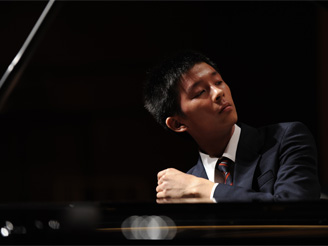
KJ is a special HK documentary about a talented boy’s growth under the influence of his family members, teacher, friends, students, religion, school, etc, and his views towards different issues.

During the movie, you can feel his intrinsic passion for music. He plays music, not because of his desire to win competitions, but his love for music. According to psychology, he has achieved self-actualization. Besides, I’m intrigued by his talent and unique personality.

However, you will also feel his arrogance and rudeness sometimes. Indeed, his character is not pleasing and the director, by inserting the right footage, reminds the audience that what a talented person says is not always right.

 
Then, is KJ a successful person whom we should learn from? Everyone will give a different answer as they define success differently. For example, his teacher mentions the key to success: Talent + Modesty. In my opinion, no one is perfect and KJ does have his strengths and weaknesses.  

The film would be better if KJ’s period of getting lost can be shown. Apart from this, one person who is supposed to be important to KJ is missing in the film. The footage of that person should be included so that the irreplaceable role of his teacher can become more memorable through comparison.


On the whole, the film is a comprehensive study of the growth of a talented boy, KJ. He is so different from other contemporaries that one may find in the movie and his thought-provoking remarks gripping.