


Dreams are the Forfeits Hongkongers Pay for Economic Development
Kenji Chan
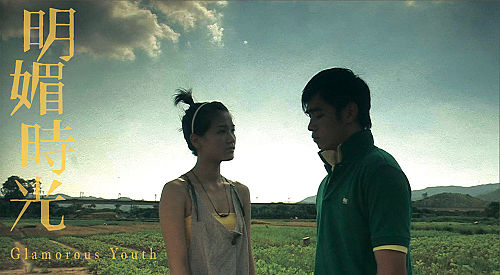
Glamorous Youth is a gloomy and artistic movie about the growth of a Hong Kong boy who becomes a man in one year, Hong Kong people’s loneliness and loss of dreams, the glamour of youth, the problematic relationship between typical Hong Kong men (港男) and typical Hong Kong ladies (港女) and the changing relation between China and Hong Kong.
The film is set in 2006 and ends in 2007. After 10 years since the handover to China, Hong Kong is on the surface a prosperous international city, yet Hong Kong people value too much the importance of money and spend too much time working, so our family members are often neglected. As a result, most of us lack dreams and feel lonely. We don’t know what we live for.
Apart from the messages engaging Hong Kong people, I love the cinematography and symbolic images e.g. the lighthouse with the light off and the train linking China and Hong Kong. Local places like Chan Nam Chong Memorial College, Cho Yiu Estate, Kwai Tsing Threatre, Cheung Hang Estate, Kwai Chung Container Terminal, etc, can be seen. There are also lots of beautiful scenes showing the Hong Kong skyline and buildings which are sometimes deliberately made out of focus. They symbolize the characters’ emotions, e.g. a clear sky seen while running, and convey a message that Hong Kong is prosperous on the surface, but in fact we get lost in this concrete jungle and cannot see our future clearly. Besides, the dark-yellow / dark-red rooms with a sharp contrast between light and shadow, the black-and-white factory and the dimly-lit wedding ceremony can highlight Hong Kong people’s loneliness. Moreover, the mirror in the flat is cleverly used to show the inseparable, but alienated relationship between the father and his son.
The songs used fit the theme and mood of the movie very well, for instance, The Pearl of the Orient (東方之珠). The Cantonese opera (粵曲) also points out the importance of appreciating art.
The cast generally acts naturally and the actor who delivers the most finely nuanced and convincing performance is Tai Bo (太保) who stars as the main character’s father undergoing middle-age crisis.
Nevertheless, the film can be more well-organized and focused. Moreover, the teacher is a little bit preachy and implying his sexual orientation seems unnecessary; so are the explicit sex scenes.
On the whole, it is a sincerely made melodrama most Hong Kong movie lovers can identify with. After the screening, the audience may ponder on the gloomy future of Hong Kong where people are only obsessed with money and forget about our dreams, without which we are only walking skeletons without souls.